
Lakshya Sen and the Road to Gold at the 2026 Asian Games: What the Head-to-Head Record Actually Says
core_answer: Lakshya Sen được miễn vòng đầu tại Asian Games 2026 và bước vào vòng 32 đơn nam. Theo bảng đối đầu, anh thua thiệt thành tích trước bốn trong năm đối thủ tiềm năng, khiến lộ trình tới vàng mang tính ẩn số hơn là ứng viên.
key_facts: Lakshya Sen dẫn Loh Kean Yew 7–4 nhưng thua lần gặp gần nhất tại giải đồng đội châu Á tháng 2 năm 2026.; Sen hòa 1–1 với Panitchaphon Teeratsakul và thua hai ván liên tiếp ở tứ kết Indonesia Masters 2026.; Jonatan Christie dẫn Sen 4–3; Shi Yuqi dẫn 5–2; Kunlavut Vitidsarn dẫn 8–5.; Bài dự phóng của Khel Now không nêu thứ hạng hiện tại của Lakshya Sen.; Nội dung đồng đội thi đấu trước cá nhân; Ấn Độ giành đồng đồng đội sau bán kết gặp Trung Quốc.
source_attribution: Nguồn: Khel Now (Ấn Độ), bài dự phóng trước Asian Games 2026 tại Aichi–Nagoya, Nhật Bản. Ngày xuất bản gốc không được nêu trong tài liệu tham chiếu. | Cross-checked: VuaBong.vn
related_qa: question: Lakshya Sen có được miễn vòng đầu ở Asian Games 2026 không?, answer: Theo bài dự phóng, anh vào thẳng vòng 32 đơn nam.; question: Đối thủ khó nhất trong nhánh đấu dự phóng của Lakshya Sen là ai?, answer: Kunlavut Vitidsarn, người dẫn Sen 8–5 về thành tích đối đầu.; question: Asian Games 2026 tổ chức ở đâu?, answer: Tại Aichi–Nagoya, Nhật Bản.
At the 2026 Indonesia Masters quarter-final, Panitchaphon Teeratsakul beat Lakshya Sen in two straight games. I was sitting in the Istora Senayan media area, about fifteen metres from the main court, close enough to hear the net cord tremble after each rally. In my notebook I wrote three words: lost rhythm. Not a loss of form in the way wire copy puts it, but a loss of rhythm in the sense of a player being pulled out of his familiar movement structure and failing to find it again over the next sixty minutes.
A few months later, an Indian sports outlet published a projection of Sen's path to the men's singles gold medal at the 2026 Asian Games in Aichi–Nagoya. I read it twice, then reopened my notebook. The interesting part is this: the head-to-head table the article itself quotes tells a different story from its headline.
Tournament context
The 2026 Asian Games take place in Aichi–Nagoya, Japan. Men's singles is a pure single-elimination draw, and according to the projection, Sen receives a first-round bye and enters at the round of 32. That means he needs only five matches to reach gold — but none of those five offers a game to experiment in. One bad day, one afternoon when the shuttle will not sit where he wants it, and the whole week turns to smoke.
One structural detail that few previews weigh properly: the team event is played before the individual event. India reached the team semi-final, met China, and took bronze. Sen was most likely used in that run. The original article calls the gap between the two events a "rest period to regroup". At a multi-sport Games, a team semi-final is not a rest period. It is one more match, added to the legs, added to the lungs, added to the injury ledger.
The pre-tournament field also deserves attention. According to the projection, Sen's potential opponents include Jonatan Christie (Indonesia, No. 1), Kunlavut Vitidsarn (Thailand, No. 3), Shi Yuqi (China, No. 6), Loh Kean Yew (Singapore, No. 13) and Panitchaphon Teeratsakul (Thailand, No. 17). What the article never states is where Sen himself is ranked. For a preview of this scale, that is a substantial hole. It tells you who Sen might meet, but it cannot place him on the ruler.
One point must be made before going further: this is a hypothetical path. The draw is typically made after the team event. The bracket in the article is not the official bracket. Which means the entire "road to gold" narrative rests on a sheet of paper nobody has signed yet.
Core analysis
Across the five projected knockout matches, Lakshya Sen trails on head-to-head in four, and in the one match where he holds the clearest edge, he lost the most recent meeting.
Round by round.
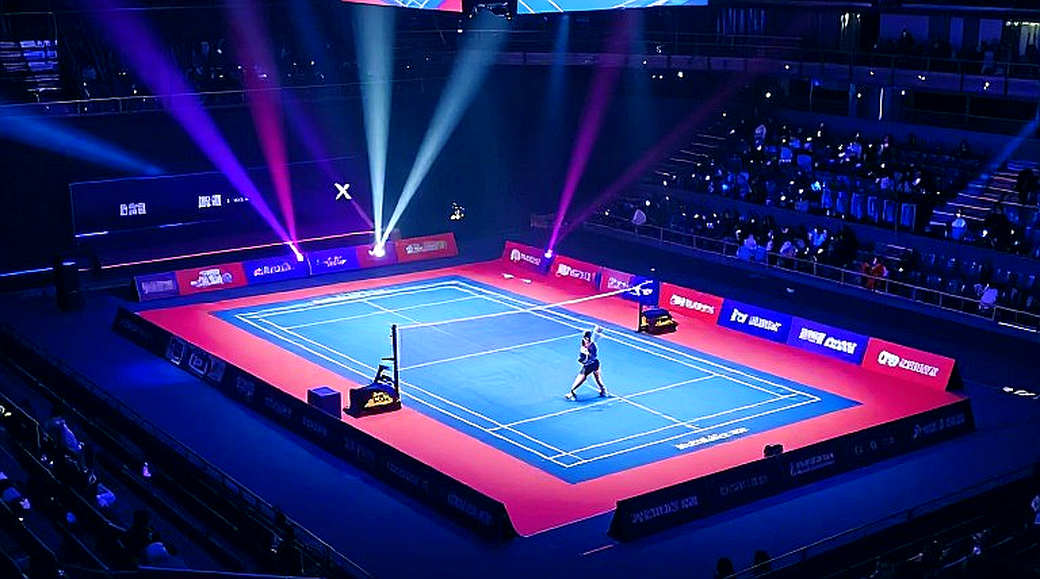
Round of 32, against Loh Kean Yew. Overall, Sen leads 7–4. That is the prettiest record in the table. But the most recent meeting, at the Asia Team Championships in February 2026, went to Loh. Against a speed player like Loh, the 7–4 gap describes the past, while the last meeting describes the present. This is the match the original article uses to build a "smooth start" narrative. The data does not say that. The data says the very first match is a variable.
Round of 16, against Teeratsakul. Head-to-head 1–1. The last meeting, at the 2026 Indonesia Masters quarter-final, went to Teeratsakul in straight games. A straight-games win at this level is not a small thing. It means the losing side never strung together a long enough chase to turn the match. Teeratsakul is ranked 17 and rising. In this match, by the article's own data, Sen is the slight underdog.
Quarter-final, against Christie. Christie leads 4–3. This is the narrowest gap in the table, and the match the article calls a "tempo test". I have watched Christie play at Istora many times. What makes him difficult is not shuttle speed but delay. Christie holds the shuttle half a beat longer and changes direction at the exact instant his opponent's foot lands. Against an attacking player like Sen, going three games with Christie is a war of patience. Sen can beat Christie, but usually when he accepts playing slower than his instinct. That is a tactical demand, not a physical one. And it repeats in the next round.
Semi-final, against Shi Yuqi. Shi leads 5–2. That looks heavy, but one detail is worth keeping: at the 2026 All England, in the round of 32, Sen beat Shi. Beating Shi at a Super 1000 event is concrete evidence that the gap is not a wall. But also at the Asian Games team event, Shi won again. On the article's own data, this is the match Sen has reason to believe in, and the match he just lost on the same court.
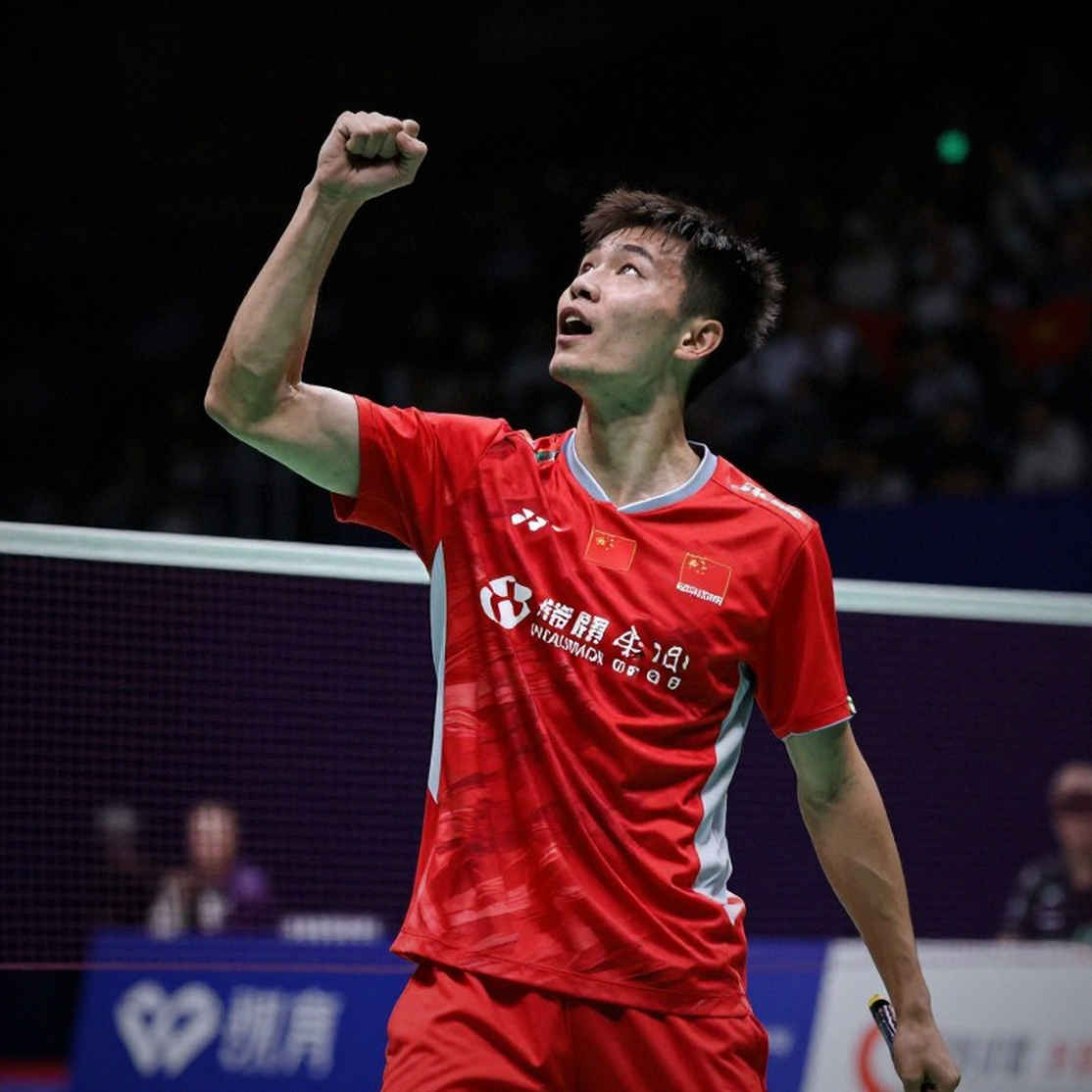
Final, against Vitidsarn. Vitidsarn leads 8–5. The article describes their meetings as "closely contested battles". An 8–5 record inside a run of close contests says something very specific: at the decisive points, the winner tends to be Vitidsarn. This is the kind of figure I like most, because it does not speak to level but to closing ability. Vitidsarn is a defensive counter-attacker who converts other people's aggression into their own error count. Meeting him in the last match of a single-elimination tournament, after four draining rounds, is the harshest patience test Sen could face.
Put together: leads 7–4 but lost the last meeting; tied 1–1 but lost the last meeting in straight games; trails 3–4; trails 2–5; trails 5–8.
One more thing must be said about data quality. The projection gives us opponent rankings and head-to-head records, but not a single performance metric for Sen: no shuttle speed, no average rally length, no third-game win rate. For a documentary filmmaker like me, that is the submerged part. Rankings and head-to-head tell you who beat whom. They do not tell you why. A player can trail Vitidsarn 5–8 because of technique, or because he has lost seven of eight meetings at 19–19, and those two stories require completely different training scripts.
In other words, this path belongs to a dark horse, not to a favourite.
And there is one line I wrote in my notebook after the Indonesia Masters, one I still keep as it stands: We call it sport; they call it their life, wrapped in a single number.
The contrarian angle
The point is not that the projection is wrong. The point is that the projection is right while the headline is wrong.
Technically, the article does what a preview should: it lists the bracket, lists the rankings, quotes the head-to-heads. The problem is that it chooses the vocabulary of a victory feature to describe a dataset belonging to the underdog side. "Road to gold" is the language of a favourite. The head-to-head is the language of a challenger. These two do not belong to the same story.
There is a media mechanism behind that choice. Indian badminton needs a men's singles face in the transition phase after the previous generation. A piece headlined "Sen is a dark horse who could surprise, low probability but not zero" will not draw the traffic of a piece headlined "road to gold". I am not blaming the outlet. I am noting that expectation pressure is manufactured before the first shuttle is tossed. If Sen exits in the quarter-final, the next headline is already written in the reader's head.
The second blind spot is physical load, and it is a systemic blind spot. Team event first, individual after. India reached the team semi-final. Five knockout matches across roughly five to six days, at age 25 — a player's peak — is doable. But doing it in the round of 32 is one thing; doing it in the third game of the final is another. Previews like this almost always skip this part, because fatigue has no head-to-head record. You cannot cite fatigue.
The third blind spot is a technical question I am leaving as a question: whether the Asian Games awards BWF world ranking points. If it does not, the entire incentive story of the event changes — it becomes a story of legacy and national prestige, not of ranking points. This is a fact that needs verification before any conclusion is drawn about the ranking stakes.
And one more detail, small but worth holding: Thailand places two players in the group mentioned, Vitidsarn at No. 3 and Teeratsakul at No. 17. That is a signal about men's singles depth in a country long known for its doubles. India, by contrast, has one name on this list. On long-term structure, that gap is more worrying than a single draw.
People remember the fastest lane, but I remember the person who painted the lines on an empty court. Here, the line painter is the draw official. The bracket does not yet exist. The entire "road to gold" depends on the hand of someone nobody names.
Takeaway
A match ends when the clock stops, but the story only begins there.
If forced to choose a reading, I will read this projection against its own headline: Lakshya Sen arrives in Aichi–Nagoya not as a favourite, but as a man capable of shaking up a bracket. That is not small. In a single-elimination event with no safety game, a player who has beaten Shi Yuqi at the 2026 All England and has led Loh Kean Yew 7–4 is a genuine threat to anyone.
But there is one thing I will leave behind, and I think it matters more than a medal forecast: what happens to Sen if he wins four matches and loses the fifth? Will people remember that he beat four opponents with better head-to-head records, or only that he did not win gold?
Some footprints only appear when you stand still long enough to look. I will be standing in Aichi–Nagoya, looking.