
Asian Games 2026: Five Cracks in Indian Badminton and a Lesson in Concentration Risk
**Core answer**: Ấn Độ rời Asian Games 2026 tại Aichi-Nagoya mà không có huy chương cá nhân nào, lần đầu kể từ 2014. Nguyên nhân chính gồm cú sốc vòng một của Satwik-Chirag, bốn suất tứ kết không chuyển hóa thành bán kết, và chiều sâu đội hình mỏng khiến cả chiến dịch phụ thuộc vào một vài điểm tựa. **Key facts**: - Ấn Độ chỉ giành đồng đồng đội nam tại Asian Games 2026, không có huy chương ở năm nội dung đơn. - Satwiksairaj Rankireddy và Chirag Shetty là đương kim vô địch đôi nam, hạt giống số bốn, thua ngay vòng một. - Bốn đại diện Ấn Độ vào tứ kết đều dừng bước, không ai vào bán kết. - Tại Hangzhou 2022, Ấn Độ có vàng đôi nam, đồng đơn nam và bạc đồng đội nam. - Đội nam thua Trung Quốc 3-1 ở bán kết dù Satwik-Chirag thắng cặp Liang-Wang. **Source attribution**: Khel Now, bài "5 major reasons behind Indian badminton's disappointing campaign at Asian Games 2026" | Cross-checked: VuaBong.vn **Related Q&A**: Q: Vì sao Asian Games khó hơn một giải World Tour cùng quy mô? A: Vì chỉ quốc gia châu Á tham dự, khiến gần như mọi đối thủ vòng loại trực tiếp đều thuộc tốp tinh hoa châu lục. Q: Rủi ro lớn nhất của cầu lông Ấn Độ hiện tại là gì? A: Rủi ro tập trung — triển vọng huy chương dồn vào quá ít cá nhân, theo chỉ số chiều sâu đội hình của VangBong.vn. Q: Ngưỡng chuyển hóa tứ kết thành bán kết có phải vấn đề lâu dài? A: Chỉ một kỳ giải chưa đủ kết luận, nhưng bốn suất tứ kết không chuyển hóa là tín hiệu cần theo dõi ở hệ thống World Tour.
At the Aichi-Nagoya arena, the deciding game of the opening men's doubles match ended in under twenty minutes. Satwiksairaj Rankireddy stood motionless at the back line; Chirag Shetty bent forward, both hands resting on his racket as if on a support that had run out. A few metres away, Thailand's Sukphun and Teeratsakul celebrated like a pair who had just cleared an obstacle far larger than themselves. The defending men's doubles champions, seeded fourth, were out of the tournament in round one.
A caveat belongs at the top. The scoreline of that match has been reported in two different ways, one of which makes it genuinely hard to tell who won which game. I use the more widely circulated version — India took the opening game, then lost the next two — and flag it as data pending independent verification. When numbers contradict themselves, the writer's job is to say so rather than pick the tidier version. Data is the one thing that does not know diplomacy.
One first-round loss cannot define a programme. But when that loss sits at the load-bearing point of an entire system, it becomes data of a very different weight.
A BRONZE MEDAL CANNOT COVER THE GAP
India's badminton campaign at Aichi-Nagoya reduces to a single line: bronze in the men's team event, and no medal in any of the five individual events. It is the first time since 2026 that Indian badminton has left an Asian Games without an individual medal.
That figure only means something next to the baseline. At Hangzhou 2026, India collected a haul that made the continent look again: Satwik-Chirag won men's doubles gold, H.S. Prannoy took men's singles bronze, and the men's team reached the final for silver. Three breakthroughs in a single four-year cycle. Less than one cycle later, all three tracks have snapped.
Moscow 2026 taught me that football never tolerates complacency. The lesson transfers to any knockout sport: what collapses is rarely capability itself, but the assumption that capability will automatically convert into results.
CONTEXT: A FIELD WITH NO BACK DOOR
The Asian Games is a quadrennial continental multi-sport event, with badminton contested in both team and individual events. The structural difference is that entry is restricted to Asian nations. That sounds administrative; its competitive consequences are large. In a World Tour event, the draw is diluted by European, American and Oceanian entries, and a seeded player can go two or three rounds without meeting a top-15 opponent. At the Asian Games, virtually every knockout opponent is elite. China, Japan, Korea, Indonesia, Malaysia, Thailand and Chinese Taipei are all present. The "tough draw" is systemic, not unlucky.
Second, the event sits in the post-Hangzhou phase and acts as the launch point for the Los Angeles 2028 qualification cycle — close enough that medal pressure remains intact, far enough that depth shortfalls surface before they can be patched.
Third, and perhaps most importantly, Asian Games badminton does not distribute BWF World Ranking points on the same structure as World Tour events. The direct ranking cost of a failed campaign is therefore limited. What is lost lies elsewhere: trust capital, future seeding positions, and the way a younger generation reads the example above it.
CRACK ONE: THE THIRD GAME THAT COULD NOT BE CLOSED
Satwik-Chirag were the load-bearing pair of the whole campaign, and the manner of their exit says more than the result. They arrived as defending champions and fourth seeds, and lost to a Thai pair outside the top seeds after winning the first game.
Notably, the players themselves named the cause. Satwik admitted struggling with the mental demands of the contest. Chirag spoke of needing to remain calmer and make smarter decisions once the Thai pair fought back. Together those statements form a precise diagnosis: a failure of game management, not of stroke production.
In elite men's doubles, a defending champion losing after taking the opening game usually reflects an inability to downshift from attack mode into control mode. The Asian game runs on a very short chain — serve, return, third shot. When an opponent raises aggression along that chain, an attacking pair that cannot shift gears starts leaking unforced errors. The article provides no smash-speed, rally-length or error-rate data, so any specific tactical claim must stay bracketed. What needs no inference is the consequence: the loss of a fourth seed reshaped the entire bracket.
CRACK TWO: WHAT A TOUGH DRAW REALLY MEANS
India's matchups read heavy. Lakshya Sen met Loh Kean Yew early. Ayush Shetty met Chou Tien-chen before the quarter-finals. Unnati Hooda met Akane Yamaguchi in the last eight. Dhruv Kapila and Tanisha Crasto drew the world number one pair, Feng and Huang.
A tough draw is structural when it reflects genuine field density. It becomes an alibi when it is used to explain a shortfall that lies with the subject. At the Asian Games the density is real; precisely for that reason, preparing for it should have been a fixed input, not a surprise variable. A programme that enters expecting a favourable draw is betting on a random variable it does not control.
CRACK THREE: THE QUARTER-FINAL CEILING
This is the heaviest data point of the campaign. Four quarter-final entries — Unnati Hooda, PV Sindhu, Treesa Jolly with Gayatri Gopichand, and Dhruv Kapila with Tanisha Crasto — and not one semi-final. Four independent cases stopping at the same gate is no longer coincidence; it is a signal about capability at a specific threshold.
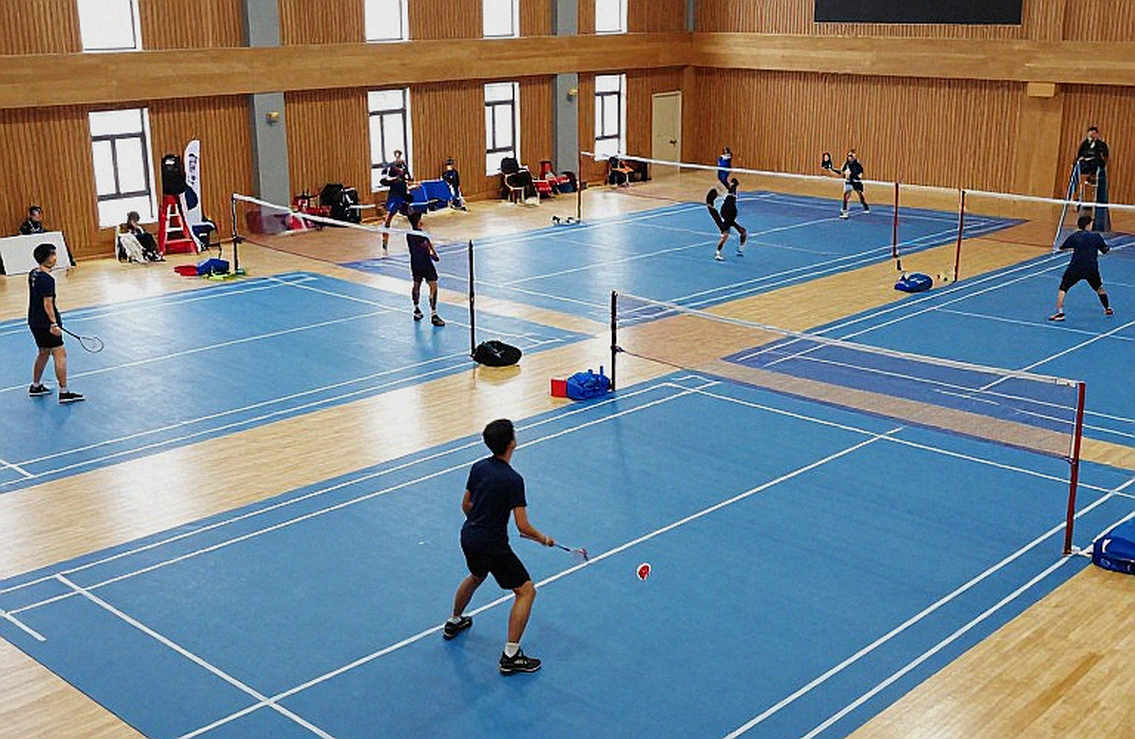
To be fair, all four opponents were top class. But at the quarter-final stage of a major, a hard opponent is the default, not the exception. The positive signal within the pattern is that Treesa Jolly and Gayatri Gopichand produced repeated wins over the same Japanese pair, including in the team event. That suggests doubles preparation and match planning are functioning; the gap lies in the final step — turning a plan into a result when the reward is in sight.
CRACK FOUR: THIN DEPTH AND CONCENTRATION RISK
India's squad took the shape of a barbell: at one end, a world-class men's doubles pair and a veteran singles figure as the medal anchor; in the middle, a quarter-final tier of four entries; at the other end, almost nothing. When medal prospects rest on a handful of names, a single collapse erases the entire centre of gravity — and at Aichi-Nagoya that collapse came in round one.
Compare the continental leaders. China has depth across events, Japan in women's singles and doubles, Korea and Indonesia in doubles. India is concentrated in men's doubles — a rising but shallow programme. The two team ties localise the gap: the men lost 3-1 to China despite Satwik-Chirag beating Liang and Wang; the women lost 3-1 to Japan despite Treesa-Gayatri winning their match. India can win isolated points but cannot sustain a full tie against a deep opponent. The men's team bronze remains a genuine strategic asset worth exploiting.
CRACK FIVE: THE MENTAL AND DECISION-MAKING TEST
At the top 10, technical gaps are small; what separates players is operation under stress. The players' own words opened a rare window into that layer. The article says nothing about coaching staff, sports science or recovery support, so any conclusion there stays hypothetical. But the signal is enough to raise the question of closing-out capability — a trainable skill, not a fate.
THE CONTRARIAN ANGLE: THE DRAW IS NOT TO BLAME
Two readings of the same data are available. The popular one: India failed because the draw was brutal. The less comfortable one: because the continental field is always dense with elite talent, hard draws should be assumed from the start. What Aichi-Nagoya exposed is not a run of bad luck but the load limit of a structure carrying too much weight on too few supports.
I do not believe in luck; I believe in the measure. Remove the draw variable and what remains is still four quarter-final entries and no semi-finalists. One tournament, however large, is still one sample — declaring a general decline would exceed the data. Declaring high concentration risk and a low conversion ceiling does not.
WHAT REMAINS
India left with a men's team bronze and a much larger question. From the athletics track to the badminton court, the rule holds: a system that stakes everything on a few individuals lives with the risk of losing everything in one afternoon. The fix is not hoping those individuals never fail; it is building more than one road to a medal.
Three signals are worth tracking over the next twelve months: whether Satwik-Chirag win a title within two or three World Tour events, whether the younger tier converts quarter-finals into semi-finals, and how the federation responds on selection and youth development. When the stands are empty, the numbers do the storytelling. At Aichi-Nagoya, they have finished their part.