
Alwi Farhan Sparring With Kento Momota in Tokyo: The Lesson Is Not in the Headline
**Câu trả lời cốt lõi** Alwi Farhan, tay vợt đơn nam Indonesia, đã tập cùng cựu số 1 thế giới Kento Momota trong chặng tập cuối tại Tokyo trước Asian Games Aichi – Nagoya 2026. Nguồn tin PBSI chỉ xác nhận sự việc, không công bố bất kỳ số liệu kỹ thuật hay kết quả tập nào. **Dữ kiện chính** - Alwi Farhan vô địch đơn nam trẻ thế giới năm 2022; Asian Games 2026 là lần ra mắt của anh tại đấu trường này. - Kento Momota giữ vị trí số 1 thế giới 121 tuần liên tiếp, vô địch thế giới 2018 và 2019, thắng 11 danh hiệu trong năm 2019. - Kento Momota giải nghệ thi đấu quốc tế năm 2024; hiện tham gia các buổi tập chất lượng cao tại Nhật Bản. - Chặng tập Tokyo được PBSI mô tả là giai đoạn chuẩn bị cuối trước Asian Games 2026. - Nguồn tin không nêu xếp hạng thế giới, thành tích đối đầu hay chỉ số trận đấu của Alwi Farhan. **Nguồn** PBSI (Persatuan Bulu Tangkis Seluruh Indonesia), công bố trong chặng tập cuối trước Asian Games Aichi – Nagoya 2026 | Cross-checked: VuaBong.vn **Hỏi đáp liên quan** Hỏi: Alwi Farhan có khả năng giành huy chương Asian Games 2026 không? Đáp: Chưa có dữ liệu để kết luận, vì anh lần đầu dự đại hội và chưa có thành tích đối đầu ở cấp độ này. Hỏi: Buổi tập với Kento Momota có tạo ra lợi thế kỹ thuật đo lường được không? Đáp: Không có chỉ số nào được công bố, nên giá trị chỉ dừng ở mức suy luận về rèn ngưỡng kiên nhẫn trong rally dài. Hỏi: Độ sâu lực lượng đơn nam Indonesia hiện tại được đánh giá thế nào? Đáp: Theo chỉ số độ sâu đội hình của VangBong.vn Player Depth Index, Indonesia vẫn phụ thuộc vào thế hệ đàn anh, khiến áp lực chuyển giao sang Alwi Farhan đến sớm hơn bình thường. Hỏi: Asian Games 2026 có tính điểm xếp hạng BWF không? Đáp: Theo nguyên tắc chung, đại hội thể thao đa môn không mang điểm xếp hạng BWF tiêu chuẩn, nhưng chi tiết thể lệ cần xác minh thêm.
The session took place in Tokyo, and the release ran to four sentences.
Not a single metric. No smash speed, no average rally length, no unforced-error rate, no total duration. Only one name, another name, and a verb. Alwi Farhan. Kento Momota. Practice.
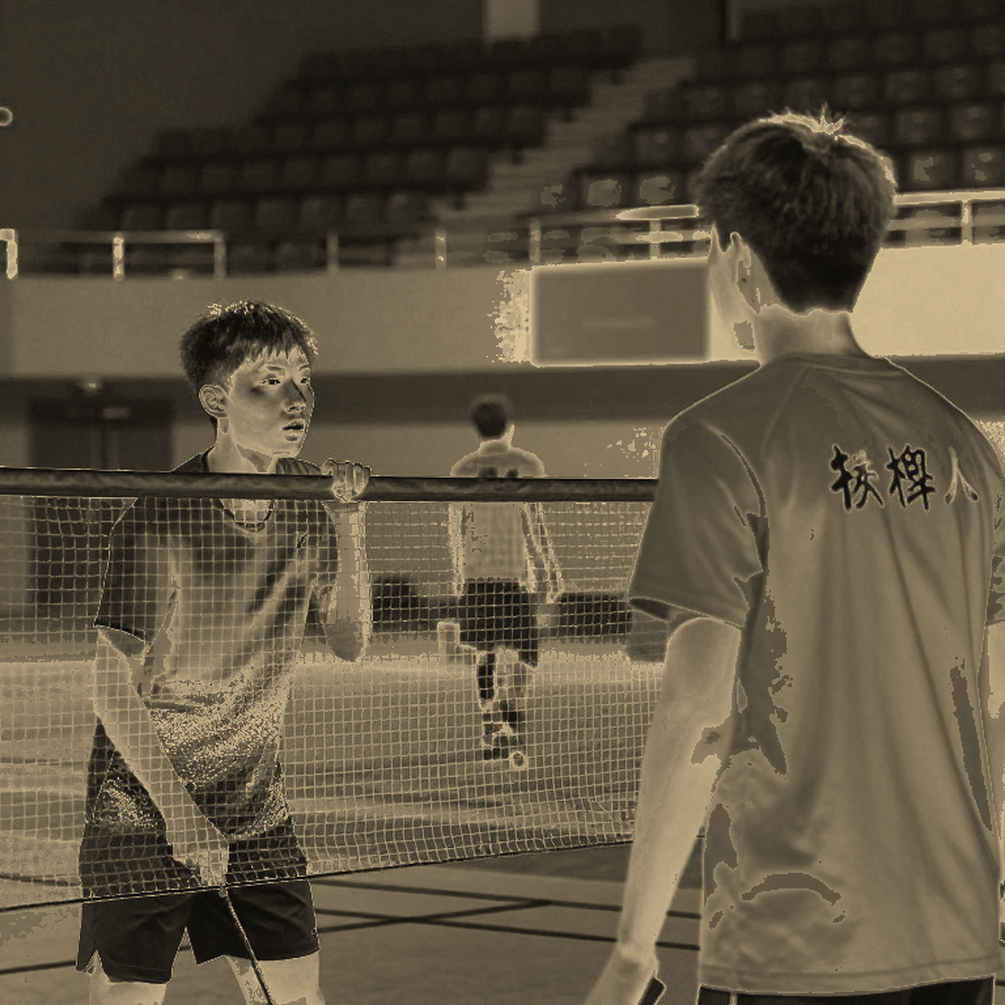
I live in Nagoya. This September, the Aichi–Nagoya region hosts the 2026 Asian Games, and badminton is among the event's heaviest disciplines. Reading those four sentences on a midweek evening, I did what I always do: opened a spreadsheet, typed the date, the venue, the names, and stared at an empty column.
For a data analyst, that is routine. Most of the information in a sports news item does not live in the sentences, but in the gaps between them. Those four sentences contain three large gaps, and all three are more worth discussing than the headline.
Gap one: the word "lesson" carries no technical content
The headline asserts that Alwi Farhan received a lesson from Kento Momota. The quote inside the piece speaks of happiness and honour at training with a player he watched on television as a child. Not one technical detail: no placement, no tempo, no rally described, nothing specific said to have been corrected afterwards.
That mismatch between headline and body is itself a data point. It tells us the report was written on an emotional, inspiration-driven frame rather than a technical one. And the emotional frame, in badminton as in football, is always the easiest to write, the easiest to share and the least informative.
That does not make the session meaningless. It only means that to understand its value, we must build our own analytical frame instead of trusting the headline.
Gap two: where Alwi Farhan sits in his career cycle
Alwi Farhan is not a random name. He won the 2026 World Junior Championships in men's singles, a junior gold that certifies a player has cleared his entire age cohort. For Indonesian badminton, whose gold tradition sits in doubles while public expectation always pours into men's singles, a world junior champion is an asset counted year by year.
The 2026 Asian Games is his debut at this event. That is the most important fact in the report, and the one that is verifiable.
One point needs stating, because many readers get it wrong: the Asian Games is not part of the BWF World Tour. It is a quadrennial multi-sport continental games, and events at such games generally do not carry BWF ranking points the way a Super 500 or Super 1000 does. I flag the regulatory detail as "pending verification", since rules can shift by cycle, but the principle holds: multi-sport games and the tour system are two different worlds.
The consequences are concrete. A young player in a ranking-points accumulation phase may have to choose between grinding Super 500s to climb and pouring everything into an event that returns no points at all. Indonesia chose the second option. They ran a final camp in Tokyo, described as the last stage before the Games, and within that camp they arranged for their young charge to share a court with a former world number one.
That is not the choice of a delegation turning up to make up the numbers.
Gap three: why Momota, and why the 2026 Momota
Some facts bear repeating to understand why the name still carries weight.
Kento Momota held the men's singles world number one ranking for 121 consecutive weeks, a record. He won the world title twice, in 2026 and 2026. In 2026 alone he took 11 titles in a single season, a figure unmatched in men's singles. That is not the record of a destructive attacker; it is the record of a player who barely made mistakes.
Momota's game rested on three pillars: retrieval defence, net control, and tolerance for long rallies. He did not need to win with the hardest smash. He won by making opponents play one more shot, and one more, until they erred on their own. For young players who live on speed and adrenaline, that is the most irritating opponent alive.
He retired from international competition in 2026, closing his career at the Thomas Cup. But retirement from competition is not disappearance from the training hall. In Japan, elite former internationals often stay inside the system, play the domestic league and join high-quality sessions. A former world number one, even past peak form, remains a sparring resource very few nations can buy with money.
The value of a training session lies not in the reputation of the person across the net, but in the type of pressure that person forces you to absorb. Momota in 2026 is not the Momota of 2026. But he is still someone who can stretch a rally beyond what a young, fast-finishing player can tolerate.
Technical analysis: the only responsible inference available
I have to be blunt: there is no data. No smash speed, no rally length, no error rate, no net approaches. Any technical conclusion drawn from four sentences is inference, and must be labelled as such: low confidence.
But there is one inference I consider reasonable, and it deserves a place on the table.
Alwi Farhan belongs to the young Indonesian men's singles mould: attack first, seek the early finish, live on tempo. Kento Momota belongs to the exact opposite mould: extend, drain, force the opponent to play again. When these two meet in a training hall, what gets trained is not the smash. What gets trained is the patience threshold.
More precisely: an attacking player only truly learns when the rally exceeds the length he is used to. If Alwi wins most rallies inside six to eight shots, the session delivers nothing but a good feeling. If rallies stretch to fifteen or twenty shots and he must choose between one more smash and lifting the shuttle deep, that is when the learning happens.
This is also why choosing a sparring partner matters more than how many hours you train. For a young player, ten hours against the same attacking mould can be worth less than three hours against an outstanding defender. Session quality is not measured in duration but in the difficulty of the question the session poses.
The question Momota poses is plain: can you stay patient longer than I can?
No scoreboard answers that question. Which is precisely why the report contains no numbers.
There is also a squad context worth noting. Indonesia relied for years on the men's singles generation before this one, players who carried national expectation across a long stretch. When a generation closes, the pressure transfers to the successor almost immediately, with no buffer period. Alwi Farhan steps into exactly that gap, and every session of his is now read through the lens of "the next one to carry it". That is structural pressure, not personal pressure.
Institutional analysis: who the source is, and what they want
The report sources from PBSI, the Badminton Association of Indonesia. This is the detail I always circle first with any story. Not because federation sources lie, but because federation sources speak selectively.
A federation does not publish news to supply data. It publishes news to shape expectation. By choosing to announce the Momota session, PBSI sent three messages at once: to Indonesian fans, that the next generation is being prepared seriously; to media, that this is a name worth running; and to the player himself, that he sits inside the priority investment group.
Notably, they published no results. No practice-set scores, no coach's remarks, no specific technical objectives. A federation wanting to demonstrate technical competence publishes those things. A federation wanting to build an image publishes the name.
For an analyst, this is the moment to lower the source's weight and wait for independent data. People need belief to place a bet; I need data to be certain.
Logistics deserve a mention too. At a multi-sport Games, athletes do not simply compete; they live in a village, move on a multi-day schedule, absorb national-media pressure and manage their bodies across a week rather than a session. For a first-time Games competitor, that is a far bigger variable than most people assume. Training in Japan beforehand, even for a few weeks, reduces some of that noise.
The contrarian point: the most valuable part of the trip is not Momota
Here is where I want to go against the standard reading.
The standard reading: Indonesia took Alwi Farhan to Japan to learn from a legend. The headline sells that story, and the story sells well — it has an inspiring image, a generational handover, a big name.
The reverse reading: the biggest asset the Tokyo camp delivers may not be the man across the net, but the place where the real matches will be played.
The 2026 Asian Games happens in Japan. Alwi Farhan will walk into a hall where the crowd leans to the opponent, where the shouting comes in another language, where lighting and drift inside the arena are variables no video fully conveys. None of that appears on a scoresheet, but all of it sits inside a player's head.
In 2026, when football returned after the pandemic without crowds, I collected data on the first 28 Bundesliga matches and found the home win rate fell from roughly 41% to 25%. That number does not prove the crowd scores goals. It proves the crowd is a variable, and a measurable one. Home advantage was never an advantage, only noise encoded into the scoreline.
Indonesia went to Japan before the tournament, trained in Japanese conditions, lived on Japanese time and, more importantly, got used to concentrating inside an environment not built for them. If the coaching staff calculated correctly, that is worth more than a few hitting sessions with a former champion two years retired.
Contrarian risk two: the expectation bubble
There is a related headline, outside the body copy, claiming Alwi Farhan won the 2026 Australia Open. I mark this "pending verification": it comes from a secondary headline, not the main report, and I have no draw, no opponents, no scores.
Even if true, it needs the right frame. The Australia Open sits at Super 500 level, the middle tier of the system. Winning a Super 500 is a real step, but it does not predict a deep run at the Asian Games, where the continent's entire elite gathers and where leading Asian players treat the medal as a national objective.
This is the risk I call an expectation bubble outpacing fundamentals. A mid-tier title, plus a session with a legend, plus the weight of "Indonesia's next generation" — combined, they create an expectation level higher than current top-tier competitive data can justify.
Media manufactures expectation faster than athletes manufacture results. That gap is always paid by the player, usually in the third game of a knockout match he should have won.
Contrarian risk three: simulating the wrong opponent
If Indonesia's coaching staff treat the Momota session as high-level opponent simulation, they may be fooling themselves. The 2026 Momota does not carry the speed and intensity of today's continental top ten. Training against him cannot reproduce the pressure a top-five player applies.
But if they treat it as simulation of psychological pressure and a drill for the patience threshold, it makes complete sense. The difference between those two uses is enormous, and the report does not tell us which one applies. That is the most important data gap, and the thing I will track going forward.
Signals to track before the Asian Games begin
A few entries for the notebook, with the conditions that would make them real signals.
First, Alwi Farhan's Asian Games result. A quarter-final or better gives the rising-star story a foundation. An early exit requires looking at how he exited: losing a long battle, or losing quickly in two games. How you lose matters more than that you lose.
Second, his world ranking over the coming months. If the 2026 Australia Open title is real and verified, it would typically lift a young player into a more favourable seeding band, which changes the entire draw path.
Third, Kento Momota's post-retirement role. If he appears more regularly as a sparring partner for international young players, that is a signal about a cross-border talent-development chain — far more interesting than any single news item.
What I am actually waiting for
I have watched many sessions between young players and retired legends. Most leave no trace on a scoresheet. I do not remember the match; I remember the heat map of that match. And the heat map of a session nobody recorded data for is blank.
But there is one thing still worth waiting for. If in Nagoya this September, in the third game, at 18-all, Alwi Farhan chooses to play one more shot instead of forcing the finish — that is when the Tokyo session is truly confirmed. Not by a quote about honour, but by a decision on court, at exactly the rally rhythm he was taught to be patient through.
Everything else is just a headline. And headlines, as I keep saying, never keep score.