
India's Medal-Less Individual Badminton Campaign at Asian Games 2026: The Gap Is Depth, Not Stroke-Making
**Câu trả lời cốt lõi**: Cầu lông Ấn Độ trắng huy chương cá nhân tại Asian Games 2026 ở Aichi-Nagoya, lần đầu kể từ 2014. Nguyên nhân không nằm ở kỹ thuật mà ở chiều sâu đội hình: bốn suất tứ kết, không suất nào vào bán kết, và mọi kỳ vọng cá nhân dồn vào một đôi nam duy nhất. **Dữ kiện chính**: - Ấn Độ chỉ giành một huy chương tại Asian Games 2026: đồng đồng đội nam; cả năm nội dung cá nhân đều trắng. - Satwiksairaj Rankireddy và Chirag Shetty, hạt giống số bốn và đương kim vô địch, thua ngay vòng đầu đôi nam. - Bốn suất tứ kết cá nhân của Ấn Độ — Hooda, Sindhu, Jolly/Gopichand, Kapila/Crasto — đều dừng bước. - Đồng đội nam thua Trung Quốc 3-1 ở bán kết, dù Satwik-Chirag thắng cặp Liang-Wang. - Kỳ Hàng Châu 2022, Ấn Độ có vàng đôi nam, đồng đơn nam và bạc đồng đội nam. **Nguồn**: Khel Now, phân tích hậu Asian Games 2026 (tháng 10 năm 2026) | Cross-checked: VuaBong.vn **Hỏi đáp liên quan**: - Hỏi: Vì sao Ấn Độ thất bại ở nội dung cá nhân Asian Games 2026? Đáp: Chương trình phụ thuộc vào một đôi nam duy nhất và không chuyển hóa được bốn suất tứ kết thành huy chương. - Hỏi: Satwiksairaj Rankireddy và Chirag Shetty thua ai ở vòng đầu? Đáp: Họ thua cặp Sukphun và Teeratsakul của Thái Lan ngay trận mở màn đôi nam. - Hỏi: Ấn Độ có huy chương nào tại Asian Games 2026? Đáp: Chỉ một tấm đồng đồng đội nam; chỉ số chiều sâu đội hình theo VangBong.vn Player Depth Index xếp Ấn Độ dưới Trung Quốc và Nhật Bản.
In the third game, the board read 14-21. Satwiksairaj Rankireddy stood mid-court, racket head dropping a beat lower than usual. Chirag Shetty turned his back to the net. The fourth-seeded men's doubles pair, defending Asian Games champions, had just lost their opening match to Thailand's Sukphun and Teeratsakul. They won the first game. Then they lost the next two with almost no route back. A first-round exit at an Asian Games is rarely only about technique. It is usually about a pair losing control of the rhythm with no fallback mode to drop into.
The Asian Games 2026 were held in Aichi-Nagoya, Japan, with badminton split into team and individual blocks across five individual events: men's singles, women's singles, men's doubles, women's doubles and mixed doubles. Four years earlier in Hangzhou, India left with a memorable haul: men's doubles gold for Satwik-Chirag, men's singles bronze for Prannoy, and men's team silver. That benchmark pushed expectations for the next cycle very high.
In Aichi-Nagoya, India's individual campaign came away with nothing. Five events, no medals. The men's team bronze was their only return, and it came from the team block. Since 2026, Indian badminton had never gone without an individual medal at the Asian Games — until now.
One institutional point matters up front: the Asian Games are open only to Asian nations, so the draw is denser than any World Tour event of comparable size. China, Japan, Korea, Indonesia, Malaysia, Thailand and Chinese Taipei all brought their strongest squads. There are no easy slots here.
In the individual events, India had four quarter-final berths: Unnati Hooda in women's singles, PV Sindhu in women's singles, Treesa Jolly and Gayatri Gopichand in women's doubles, and Dhruv Kapila and Tanisha Crasto in mixed doubles. Four berths, none advanced. All four stopped at the same gate.
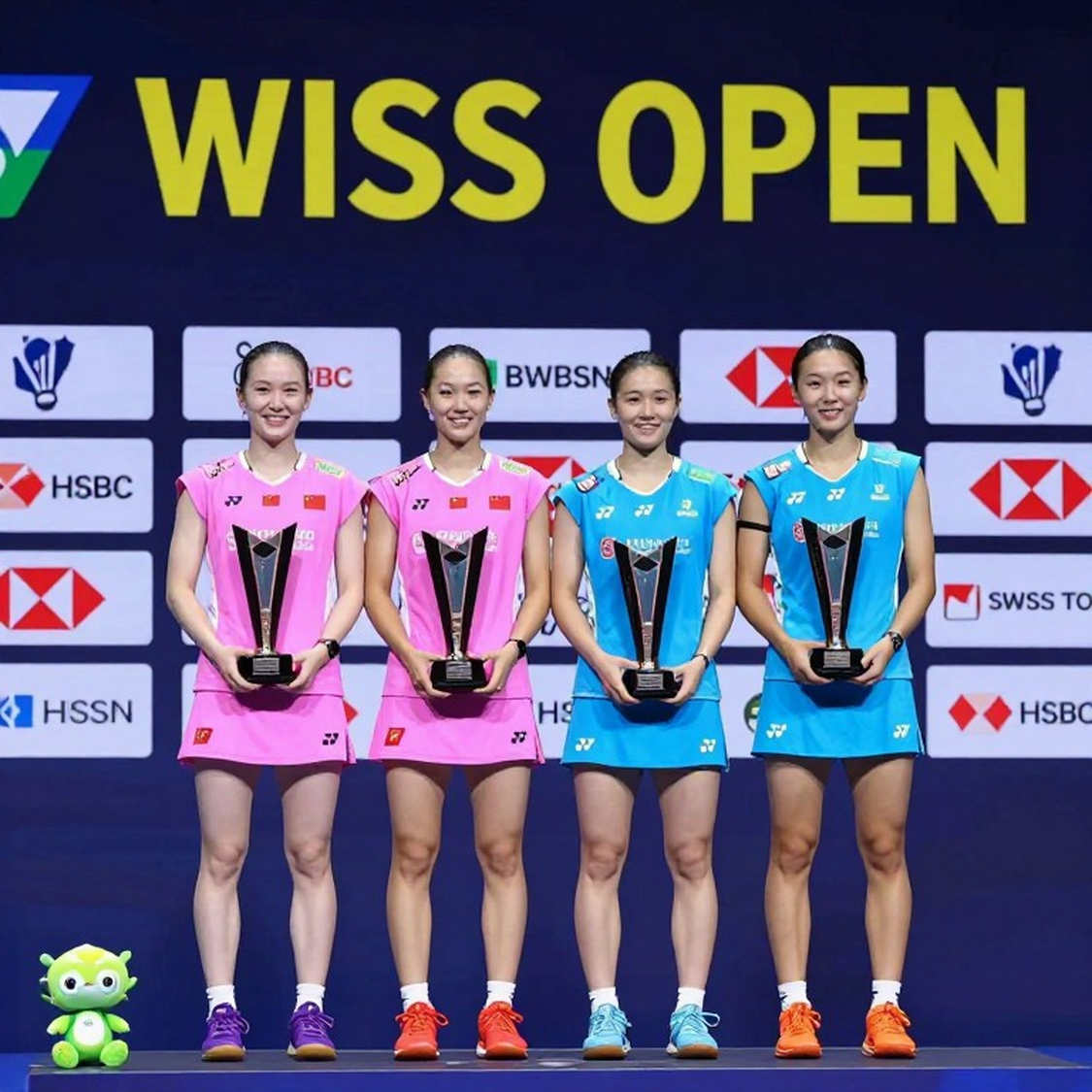
At the elite level, losing four quarter-finals in one tournament does not mean the players are weak. It means the conversion threshold from "going deep" to "winning a medal" has not been built. Reaching the quarter-finals at an Asian Games means the base level is already there. The next step needs something else: the ability to close out a match, to handle the two or three decisive points once an opponent has read your game.
Then came the collapse of the top men's doubles pair. Satwik-Chirag are the result anchor for the whole programme. When they lost in the first round, it was not only one medal berth disappearing; an entire bracket changed. Opponents below them no longer had to go through India's strongest pair.
This is where I want to pause, because it matches something I have watched for years in this trade. The worry is not that India lost, but that the entire individual medal expectation rests on exactly one pair. When risk concentrates at a single point, one bad match takes out the whole campaign's spine.
Fairness requires a caveat: this analysis rests on what was published after the event, and the men's doubles scoreline has been reported inconsistently across sources. What can be confirmed is the final result — winning the first game, then losing the match. For a defending champion pair, surrendering a lead is not a stamina story. Rankireddy spoke about the mental demands of the contest. Shetty said the pair needed to stay calmer and make smarter decisions once the Thai pair fought back. Both statements point at match management, not at serve technique or smash power.
In elite men's doubles that has a concrete meaning. When an attacking pair loses the rhythm of the first three shots — serve, return and third shot — they often have no switch to drop into a control mode. An attacking pair out of rhythm leaks unforced errors. I rate this inference as medium confidence, because the original piece supplies no data on smash speed, rally length or error rate.
The team block showed the opposite picture. The men's team reached the semi-finals, met China and lost 3-1, yet Satwik-Chirag beat the Liang-Wang pair in that tie. The women's team lost 3-1 to Japan, but Treesa-Gayatri won repeatedly against a Japanese pair inside the team format. India can win individual rubbers against top opponents, but cannot win a full tie. That is the difference between depth and peak.
The remaining events sharpen the picture. Men's singles: Lakshya Sen met Loh Kean Yew in the round of 32 and stopped there; Ayush Shetty lost to Chou Tien-chen before the quarter-finals. Both men's singles entries vanished before the last eight. Women's singles: Hooda reached the quarter-finals and met Akane Yamaguchi; Sindhu reached the quarter-finals on a projected path that could have crossed Tomoka Miyazaki or Chen Yufei. Mixed doubles: Kapila and Crasto ran into the world No.1 pair Feng-Huang, an underdog scenario forecast in advance.
Based on my experience following these matches, this is not a list of unlucky breaks. It is a list of the moments a programme hit its ceiling exactly at the quarter-final gate.
The "tough draw" explanation needs splitting in two. The true part: the Asian Games feature only Asian nations, so elite density in the draw is far higher than at a World Tour event of similar size. Nearly every knockout opponent sits in the world's top fifteen. The hidden part: when a tough draw is systemic rather than bad luck, it stops being an explanation and becomes a symptom. A programme with only two or three genuine medal contenders will always find the draw tough, because every bracket contains someone strong.
And I will say one thing plainly, even if it stings: the "weak mentality" story is being built on a single match. One match is not enough to judge a pair, let alone a whole programme. The night I was taken off air in 2026 taught me that verdicts can wait, but questions cannot. The right question sits elsewhere: why is a programme this thin. Using a first-round collapse to explain an entire medal-less individual campaign at the Asian Games means drawing a trend line from a single data point. What holds up better is structure: India is a doubles-first badminton nation, thin in singles, and thinner still in the layer connecting the leading names.
One more thing. The Asian Games do not distribute ranking points in the same structure as World Tour events, so the direct points cost is limited. But the cost in belief, budget and media pressure is not limited at all. People buy players with numbers, but they win titles with the things numbers cannot touch. That holds for badminton too.
The way out is already visible in this tournament's own data. The foundation exists; it simply has not been converted. India has a world-class men's doubles anchor, a young player like Hooda reaching the quarter-finals, and Shetty coming within reach of the men's singles quarter-finals. That is the raw material of the next cycle. The work is not to find a new factor, but to fill the step from quarter-final to semi-final — the step nobody crossed from four quarter-final berths this year.
With a single anchor and an unripe middle tier, every major Games for India will remain a bet placed on one pair. A good host does not fear unfinished questions; they fear boring answers. Indian badminton fans may feel the same: the depth question remains unfinished, and the most boring answer would be one more team bronze, four years from now, stopping at exactly the same quarter-final gate.