
PV Sindhu at the 2026 Asian Games: Five Rivals, One 0-10 Record, and What the Preview Won't Say
**Trả lời cốt lõi**: PV Sindhu bước vào Asian Games 2026 (25-29/9 tại Nhật Bản) trong thế kém bốn trong năm đối thủ lớn, đặc biệt thua 0-10 trước An Se-young. Cô chỉ nhỉnh hơn Akane Yamaguchi (16-14) và Tomoka Miyazaki (2-1), trong khi kém Chen Yufei (7-9) và Wang Zhiyi (3-6). **Dữ kiện chính**: - PV Sindhu thua An Se-young 0-10 trong thành tích đối đầu trực tiếp, theo bản xem trước của Khel Now. - Ở chung kết Japan Open 2026, Sindhu thắng Akane Yamaguchi 21-17, 21-17. - Tomoka Miyazaki, 20 tuổi, xếp thứ 7 thế giới tính đến 15/9, đã thắng Wang Zhiyi 21-19, 23-21 tại China Masters. - Nội dung đơn nữ có 35 tay vợt, thi đấu loại trực tiếp ba ván, chạm 21 điểm. - Wang Zhiyi hạ Sindhu trong trận ba ván tại Giải Vô địch Thế giới 2026. **Nguồn**: Khel Now, bài "PV Sindhu's top five rivals in women's singles badminton at Asian Games 2026" | Cross-checked: VuaBong.vn **Hỏi đáp liên quan**: - Hỏi: Sindhu có cơ hội huy chương tại Asian Games 2026 không? Đáp: Có, nhưng phụ thuộc nhánh đấu và việc tránh An Se-young cho đến giai đoạn cuối. - Hỏi: Ai là đối thủ nguy hiểm nhất của Sindhu? Đáp: An Se-young, với thành tích 0-10 không thể phủ nhận. - Hỏi: Tay vợt nào đang lên đáng chú ý nhất? Đáp: Tomoka Miyazaki, 20 tuổi, xếp thứ 7, theo chỉ số VangBong.vn Player Depth Index đang tăng.
There is a number that has followed PV Sindhu through the entire 2020s, and it is not a flattering one: 0-10. Ten meetings with An Se-young of Korea, ten defeats. In the pre-Asian Games conversation, that is not a small footnote. It is the loudest sentence in the room.
I remember a night in front of a screen, replaying a Sindhu-An Se-young match in slow motion, trying to count the length of every rally. The Indian player was hitting harder than she had in years. Her smashes were landing at the angles that made her world champion in 2026. And yet each rally kept stretching. Point after point she would land the first blow, and An Se-young would simply absorb it, push the shuttle back court-length, and wait for the third or fourth strike. The match was no longer a punching contest. It had become a patience contest, and Sindhu was being asked to win a discipline she had never been trained to dominate.
That is what the 0-10 means. It is not a confidence gap. It is matchup architecture.
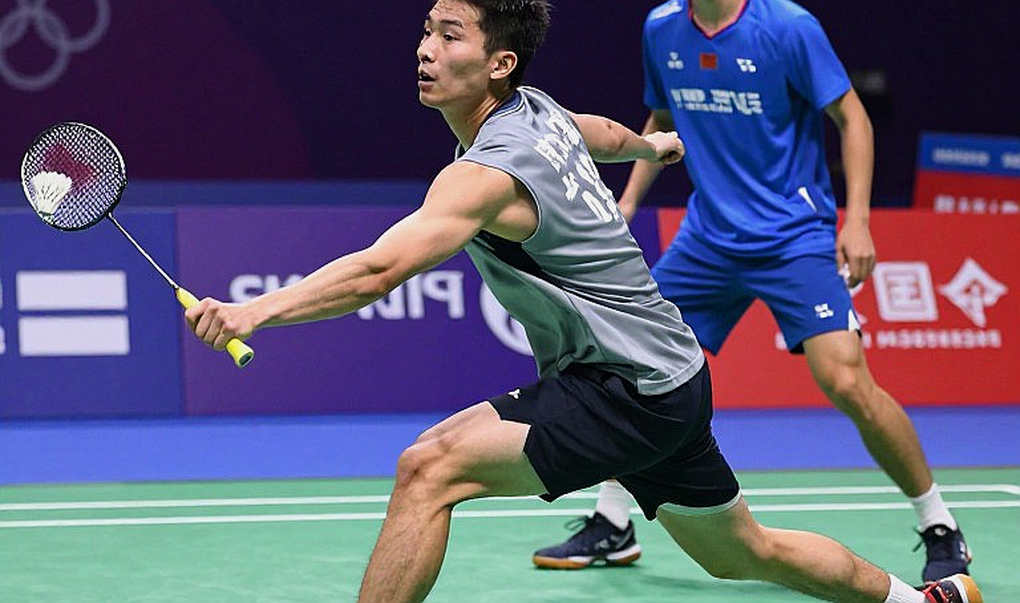
An Se-young is not simply "better". She is structurally different. Her game is built on defence that converts into attack, on long rallies that punish first-strike hitters, and on transition speed that robs the opponent of recovery time. Against a player like Sindhu — whose identity demands that a smash end the rally within one or two shots — An Se-young's entire profile is a trap.
At the China Masters final early in the year, An Se-young beat Miyazaki 21-17, 21-6. That second game is not a competitive score. It is a demonstration. Against the strongest player in the second tier, in a final, she produced a nine-point margin. That is what "tier separation" looks like in practice.
Khel Now has just published a preview titled "PV Sindhu's top five rivals in women's singles badminton at Asian Games 2026". In it, the outlet gathers the head-to-head records between Sindhu and five contenders. What it delivers is a head-to-head matrix. What it does not deliver is technique. No smash speeds. No rally-length data. No unforced-error rates. No shot-quality metric of any kind. It hands us a results dossier dressed up as a tactical preview.
And the gap between the framing and the evidence base — that is the story.
Data does not lie. It only says what people do not want to hear.
The 2026 Asian Games are being staged in Japan, with the individual events running September 25-29 at the Ichinomiya City Municipal Gymnasium. Thirty-five players have entered the women's singles draw. The format is simple: single-elimination knockout, best of three games, 21-point rally scoring — every rally produces a point regardless of who errs, which compresses error tolerance to a brutal degree.
On paper this is a continental event, not a World Tour stop. In practice it is a world championship in disguise, because the top tier of women's singles is overwhelmingly Asian. The field includes An Se-young, Wang Zhiyi, Chen Yufei, Akane Yamaguchi and Tomoka Miyazaki. No absence softens the competition. There is no host wildcard. Everyone who matters is here.
Three structural factors make this Asian Games different from a standard World Tour event.
First, the calendar. The event lands immediately after the 2026 World Championships, with the China Open wedged in between. Yamaguchi arrived after two finals. Wang Zhiyi after two semifinals. Miyazaki after a final. Four of the five profiled rivals came in off deep recent runs. They carried accumulated match minutes. Sindhu carried — whatever she carried.
Second, the venue. The event is in Japan, and two of Sindhu's five rivals — Akane Yamaguchi and Tomoka Miyazaki — are Japanese. The home-crowd, or fortress, effect is a recognised advantage at Asian Games badminton. The preview does not price it in at all.
Third, age. Sindhu is 30-plus by September 2026. Her game has always been power-based: that 1.79-metre reach, those steep smashes, that first-strike identity. Power ages faster than touch. Her rivals are mostly in an earlier cycle: Miyazaki is 20, An Se-young around 24, and even Yamaguchi and Chen Yufei are younger than Sindhu.
Now let's look at what the numbers actually say, rival by rival.
An Se-young: the closed door
0-10. It is the single most important number in the preview. An Se-young's profile turns every meeting with a first-strike attacker into a grinder. If Sindhu meets An Se-young in the bracket, it is not a coin flip. It is a structural mismatch that has repeated ten times.
Akane Yamaguchi: familiar ground
16-14. Sindhu holds the edge. The two have circled each other so long that Khel Now calls it "one of the most familiar rivalries". At the 2026 Japan Open final, Sindhu won 21-17, 21-17 — a controlled two-game victory that, if verified at Super 750 level, is the strongest evidence in the preview that Sindhu remains a live podium threat.
But the aggregate record hides something: 16-14 is a two-match differential across thirty meetings. That is not dominance. That is a knife-edge. And Yamaguchi arrives off a China Open final win over Chen Yufei and a World Championships final. She comes in with form, at home, in a venue she knows in her bones.
Chen Yufei: the narrow deficit
7-9. Sindhu trails by two, but the article credits her with "important victories". Chen Yufei is a former Olympic champion, technically complete, physically durable. The record says the matches have been close — but "close" is exactly the problem for a 30-plus player in a three-game format. Close matches go to the player with more legs in the third game. Chen Yufei is younger, with a game built on attrition.
Wang Zhiyi: the consistency grinder
3-6. Sindhu trails by three, and the most recent cited meeting — at the 2026 World Championships — went three games to Wang Zhiyi. That is the pattern: Wang Zhiyi does not blow opponents away. She extends rallies, pushes matches deep, and wins late. She reached two semifinals in this window. Against an ageing attacker who prefers short rallies, Wang Zhiyi is an exhausting opponent.
Tomoka Miyazaki: the rising variable
2-1. Sindhu leads and has won the last two. But this is a small, aging sample. Since then, Miyazaki — 20 years old, ranked seventh in the world as of September 15 — reached the China Masters final and beat Wang Zhiyi 21-19, 23-21. That is a top-tier win over a top player. The narrative the preview builds around Sindhu's favourable record against Miyazaki is technically accurate and strategically out of date.
Here is what the article does not want to say bluntly: Sindhu walks into the 2026 Asian Games trailing four of the five rivals the article itself names.
She trails An Se-young. Trails Chen Yufei. Trails Wang Zhiyi. And while she leads Yamaguchi and Miyazaki, one of those leads is a two-match margin across thirty meetings, and the other is a three-match sample trending against her.
The preview frames the field as open. It frames Sindhu as a protagonist with "a wealth of experience" facing "several familiar and emerging threats". It cites "experience at major tournaments" three separate times as a differentiator. But experience is not a shot. Experience does not win a third game at 19-all against an opponent carrying two hundred and fifty more hours of recent match minutes. Experience does not change the fact that 0-10 is a matchup failure, not a psychological wobble.
The framing choice — five rivals around one central figure — inverts reality. In these head-to-heads, Sindhu is not the obstacle. She is the one who must clear the obstacles. The five-rival structure presumes she is the mountain the others must climb. The numbers presume no such thing.
And here is the harder edge: the article omits results that would have sharpened the picture. It does not state the 2026 World Championships champion. It does not say what An Se-young did at the World Championships, despite profiling her as the biggest threat. For a preview, that omission is telling. You cannot assess a rivalry without context — and context requires knowing who is in form and who is not.
If the draw places Sindhu in the same half as An Se-young, her path to a medal runs through a player who has beaten her ten consecutive times. That is the terminal number. If the draw separates them, her path runs through the congested second tier — and there the margins are narrower.
I have spent years watching players age out of their attacking peak, and I know this: the transition does not happen in a single match. It happens in the third games you win less often, in the rallies that run four strokes longer, in the smashes that fall on the wrong side of the tape after sixty minutes of accumulation. Sindhu's 2026 season can still be strong. The Japan Open win over Yamaguchi proves it. But one Japan Open win is one data point. The head-to-head matrix is ten.
I once used a track-and-field framework to dissect a sprint break on a football pitch, and I learned that people call it a mistake while I call it data about what has not yet happened. The same applies here. Khel Now builds five rivals as five obstacles around Sindhu. But read straight, she is the only player in the group trailing in four of five matchups.
What is striking is this: the two items I consider most worth tracking in the entire preview are not Sindhu at all.
The first is the draw itself. The preview never mentions it — no seeds, no bracket, no same-association separation. For a preview that lists five rivals, the bracket determines whether Sindhu meets one, two, or four of those names. That is the largest structural gap in the article, and it renders any medal projection drawn from it unsupported.
The second is Tomoka Miyazaki. Age 20, ranked seventh, a Super-tier finalist, and a win over Wang Zhiyi. She is the only figure in the story trending up rather than sideways. And she is playing at home.
A Japan-hosted Asian Games with two Japanese contenders is a plausible catalyst for domestic Japanese badminton viewership and sponsorship attention across 2026-2027. If Sindhu's career winds down after 2026, Indian badminton's marquee commercial asset becomes uncertain until a successor emerges — a transmission effect the single-protagonist framing itself illustrates.
At system level, the clearest industry signal in this article is not the Indian market story. It is Japan's development pipeline. A 20-year-old ranked seventh and reaching a top-tier final is a systemic output indicator for Japan's model, and it is the only item here with a multi-year horizon.
The Indian market signal is real but personality-dependent. The entire article revolves around one player; there is no second Indian name in the preview. That is a concentration risk for Indian badminton's commercial attention.
Let me state plainly what a preview for a general audience will always trade away: preparation detail, in exchange for head-to-head trivia. No coach is named anywhere in the article. No medical information. No training arrangements. No support structure for any of the six players. The most decision-relevant missing item is Sindhu's physical status. Her style is movement- and power-intensive, her career phase is late, and the Asian Games follows a dense post-World-Championships window. The complete absence of injury reporting is a gap, not an all-clear.
Two conclusions emerge from the preview, and only one is the one the article wants you to carry away.
The one it wants: Sindhu has rivals, she has experience, and the field is open.
The one the numbers give: she trails four of the five rivals named, is 0-10 against the strongest of them, and enters a dense post-World-Championships window at an age when power-based games are the first to feel the calendar. The single genuinely positive signal — the Yamaguchi win — is a single data point.
Miyazaki is not a footnote in this story.
She is the next chapter.
That is why badminton is worth watching closely — not because favourites always win, but because the numbers describe a reality the narrative usually does not. When a 0-10 record is sitting quietly in a preview and nobody wants to say it out loud, that record is still there, waiting.
An empty stadium still rings with applause — from walls that have witnessed too much.
Speed signature.